
Start Looking at the Autonomic Nervous System.
STOP LOSING REVENUE TO THE “HARD-TO-TREAT” PATIENT.
Understand the autonomic response.
Expand your clinical capabilities.
Create new opportunities for your practice.
Physio PS is FDA 510(k) cleared and designed for use by physicians and healthcare providers.
Is Autonomic Dysfunction Part of the Picture?
Your Patients May Have More Than a Cardiac Problem.
When patients continue to experience dizziness, syncope, orthostatic symptoms, unexplained tachycardia, exercise intolerance, or other persistent symptoms despite cardiovascular evaluation, don't stop at the heart.
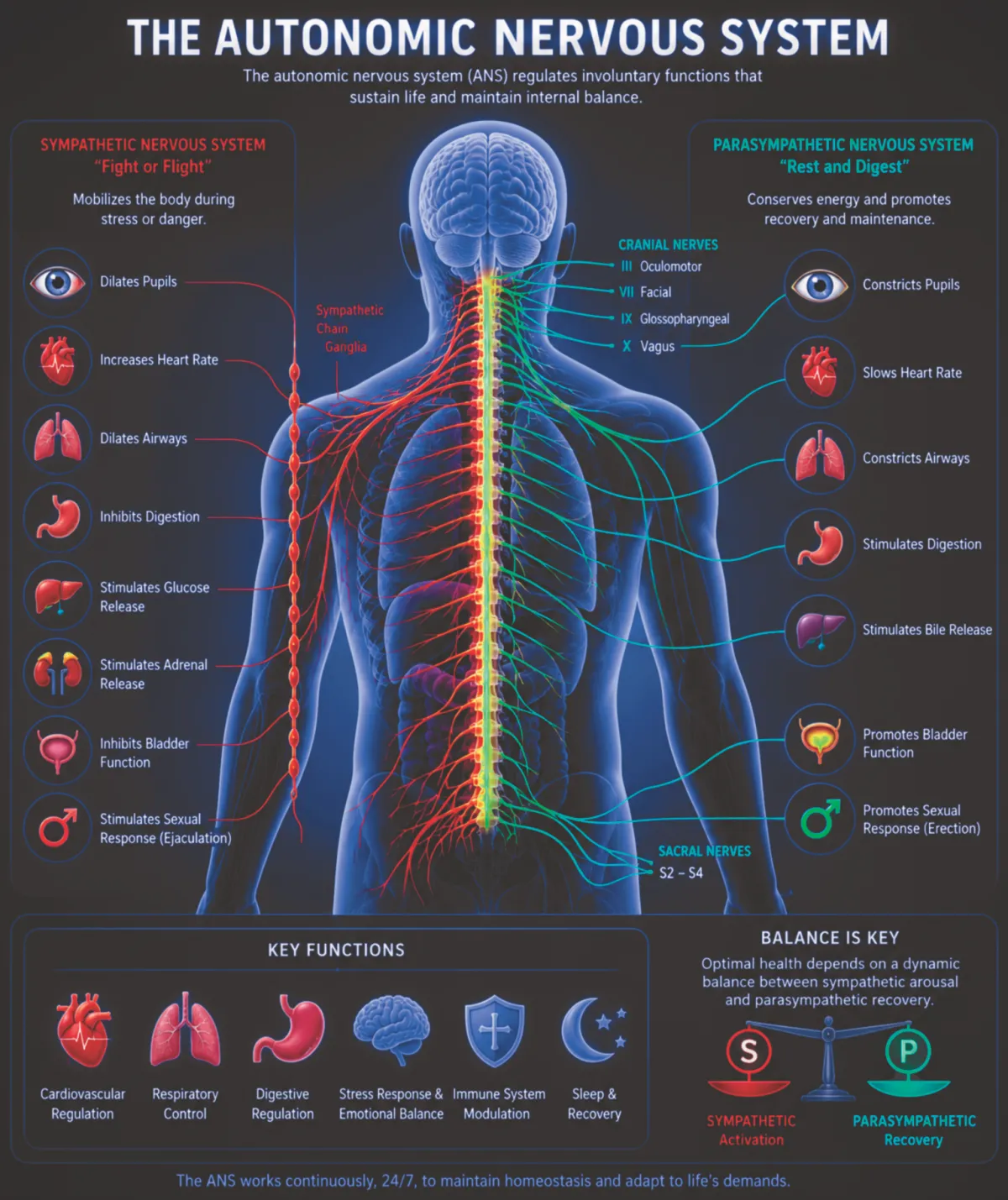
Measure the autonomic response.
Physio PS provides approximately 15-minute, non-invasive P&S monitoring that independently and simultaneously evaluates parasympathetic and sympathetic activity—giving cardiologists another measurable dimension of cardiovascular physiology.
More Patients. More Services. More Opportunity.
Turn an Overlooked Clinical Need Into a Practice Opportunity
Every cardiology practice sees patients whose symptoms don't neatly fit the findings.
Some are referred elsewhere.
Some continue through additional testing.
Some return repeatedly with persistent symptoms.
And some may have an autonomic component that has not yet been quantitatively assessed.
Physio PS can help bring autonomic assessment into the cardiology practice.
01

Identify the Opportunity
Patients with syncope, presyncope, orthostatic symptoms, unexplained tachycardia, exercise intolerance, blood-pressure dysregulation, and persistent symptoms may warrant consideration of autonomic involvement.
02
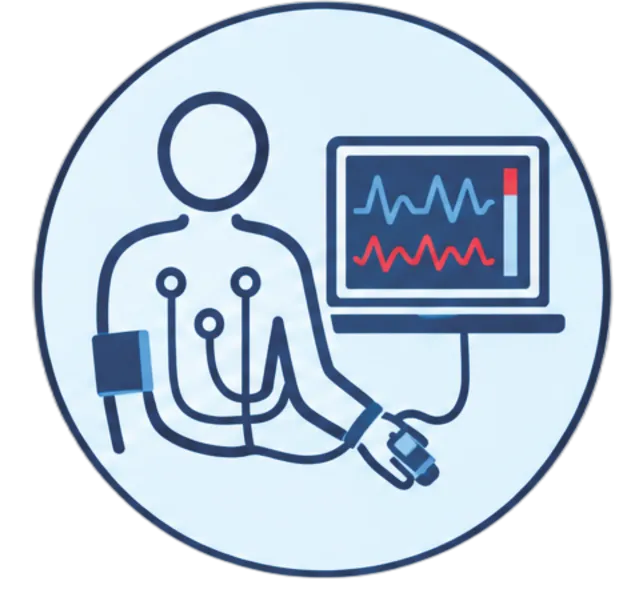
Measure the Autonomic Response
Physio PS independently and simultaneously evaluates parasympathetic and sympathetic activity during an approximately 15-minute, non-invasive monitoring session.
03

Incorporate the Findings
Use quantitative autonomic information alongside the patient's history, examination, cardiovascular testing, and other clinical information when determining next steps.
04
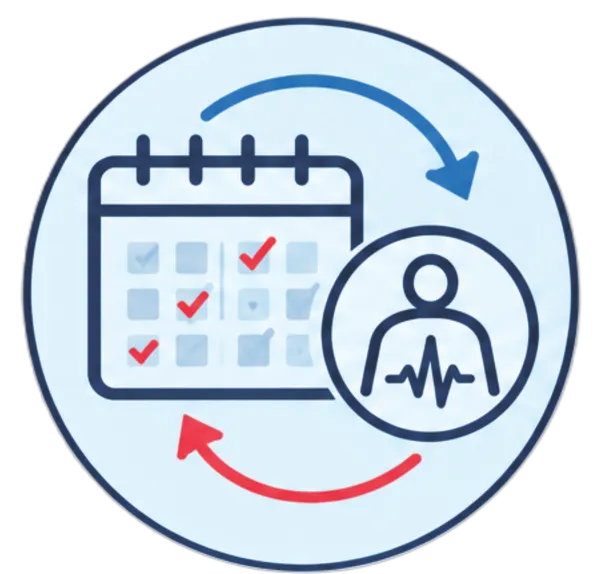
Monitor When Appropriate
Establish a baseline and use follow-up assessments when clinically appropriate to compare changes over the course of care.
05

Create Additional Practice Opportunities
Autonomic testing and follow-up monitoring can become part of a broader service offering.
Don't Just Refer the Difficult Patient.
Assess the Autonomic Component.
What If the Problem Isn't Only the Heart?
You've ruled out significant cardiac pathology.
The ECG doesn't explain the symptoms.
The patient's heart rate behaves unexpectedly.
Blood pressure fluctuates.
They become dizzy when standing.
They experience recurrent syncope or presyncope.
They can't tolerate exercise.
Yet they're still not getting better.
That's where the autonomic nervous system deserves consideration.
The autonomic nervous system helps regulate heart rate, blood pressure, vascular function, and other involuntary processes. Physio PS provides quantitative information about parasympathetic and sympathetic activity that can complement the broader cardiovascular assessment.
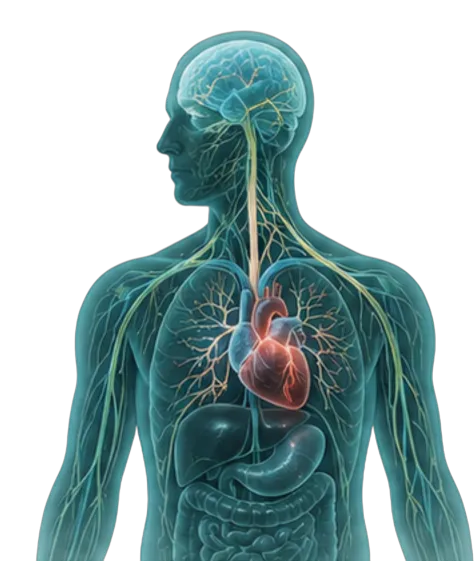
Physio PS provides approximately 15 minutes of non-invasive, quantitative autonomic monitoring that independently and simultaneously evaluates parasympathetic and sympathetic activity.
More Patients. More Services. More Opportunity.
A New Revenue Opportunity Starts With a New Clinical Service
Adding autonomic assessment can give a cardiology practice an additional service pathway for appropriate patients.
Potential practice opportunities include:
Autonomic Testing
Add quantitative P&S assessment to appropriate patient evaluations.

Follow-Up Monitoring
Compare autonomic measurements over time when clinically appropriate.

Practice Growth
Build a differentiated autonomic assessment capability around an existing cardiology patient population.

Complex Patient Management
Use autonomic findings as another piece of information when developing treatment and monitoring plans.

Referral Retention
For appropriate patients, autonomic assessment may allow the practice to investigate an additional component of the clinical picture before determining whether outside referral is necessary.
What Cardiologists and Electrophysiologists Are Saying
We're incredibly proud of the positive impact our products have made!
Letters of Recommendation
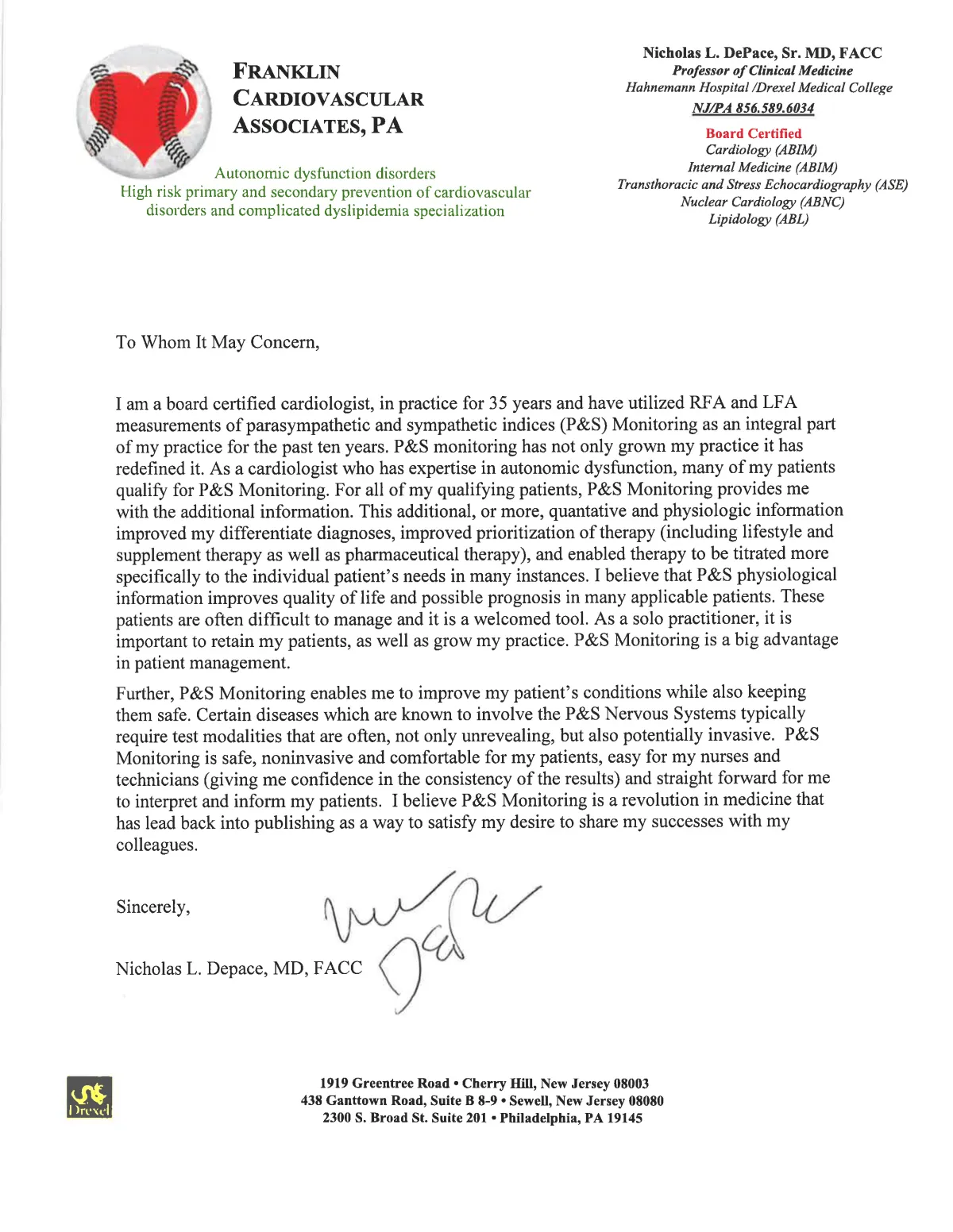
Nicholas L. DePace, Sr.
MD, FACC,
Professor of Clinical Medicine, Hahnemann Hospital/Drexel Medical College

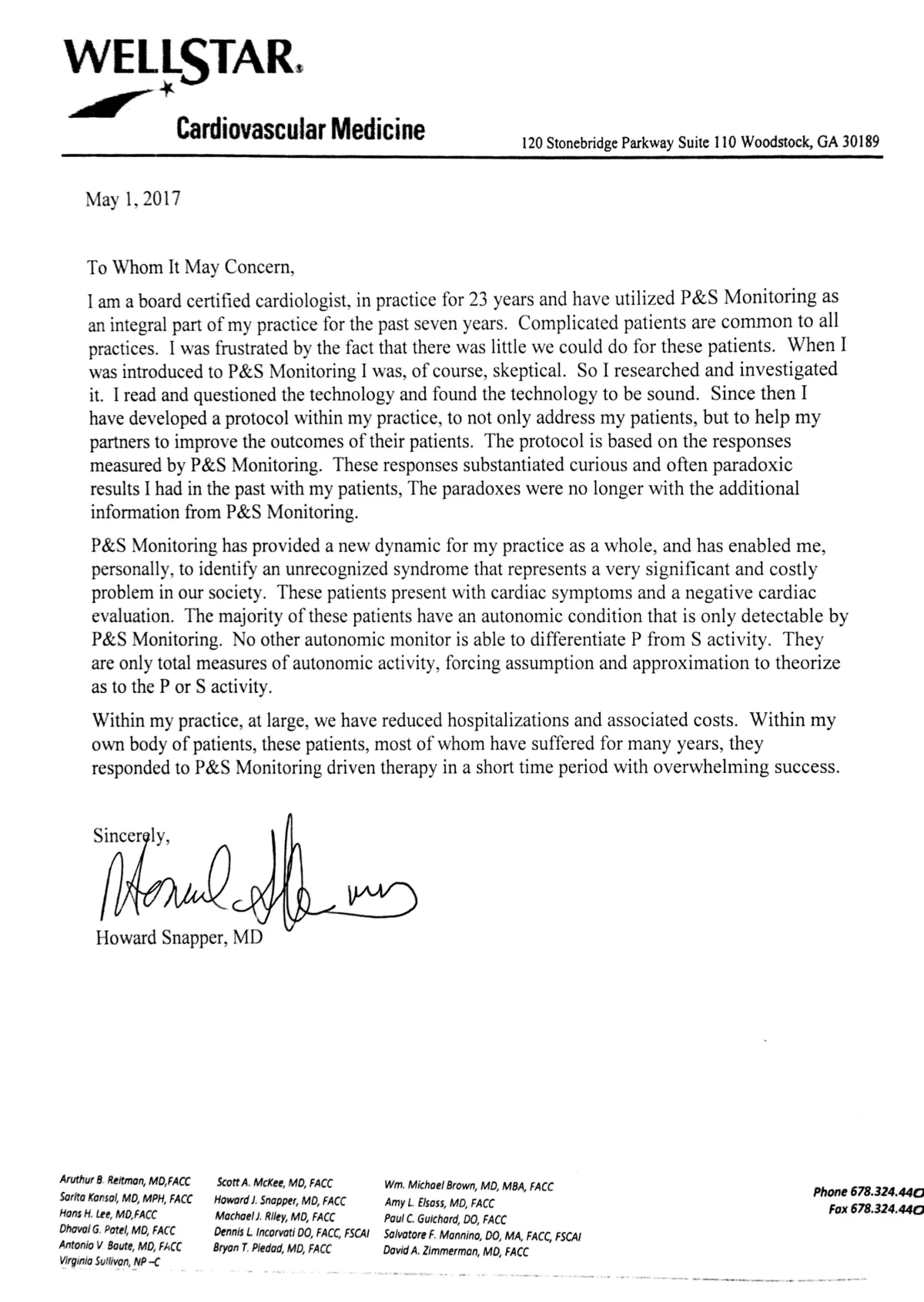
Howard Snapper
MD
WellStar Cardiovascular Medicine
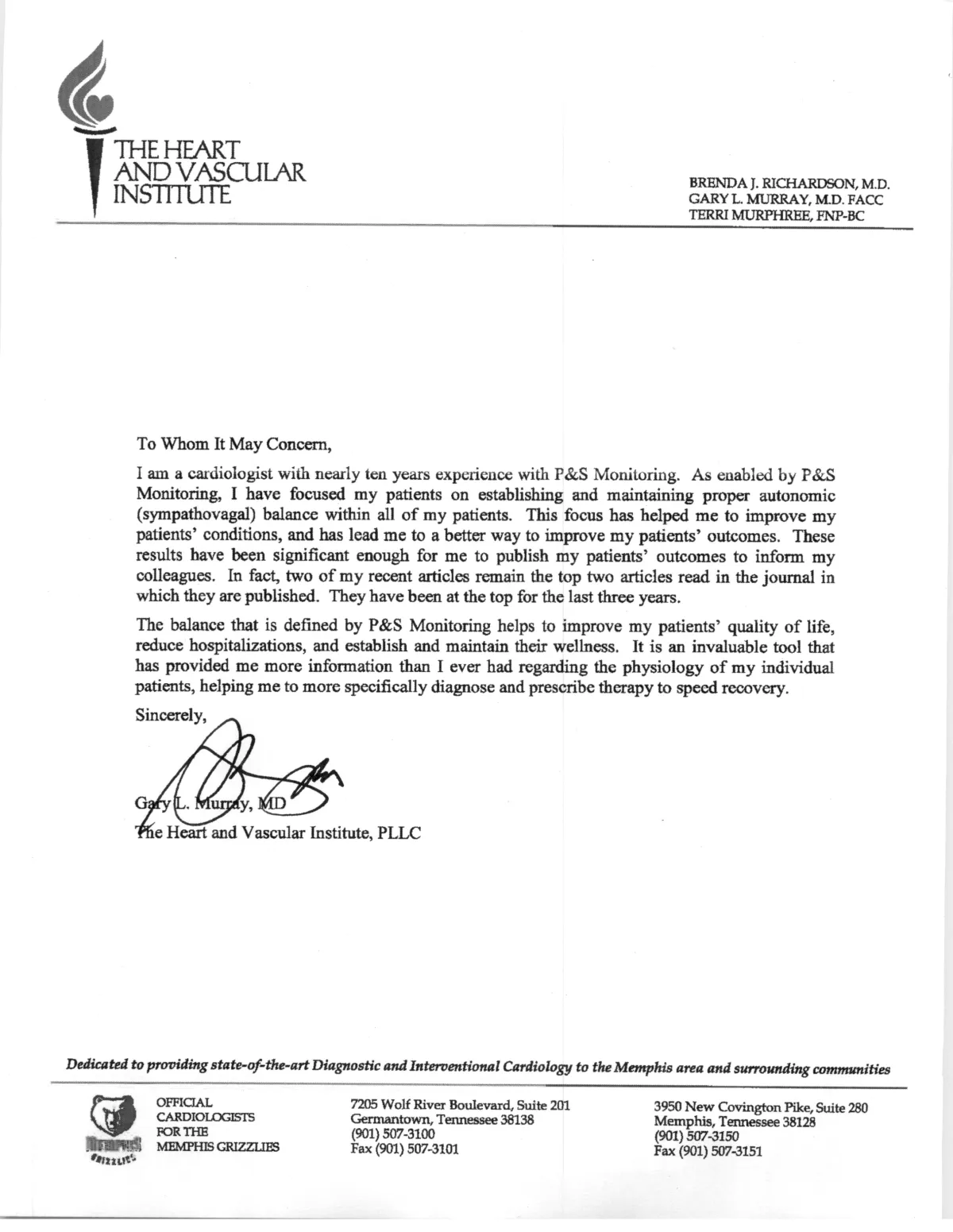
Murray
MD, FACC
Director, Cardiac Electrophysiology
Atlanta VAMC
Associate Professor of Medicine
Emory University School of Medicine
Heather Bloom
MD, FACC, Director of Cardiac Electrophysiology, Atlanta VAMC Associate Professor, Emory University School of Medicine
As a VA Electrophysiologist, I’ve used ANSAR’s Parasympathetic and Sympathetic Monitoring for years with outstanding results. It delivers diagnostic insights no other tool can provide. One case—a Navy SEAL suffering from severe dizziness and disability—was accurately diagnosed and effectively treated using ANSAR technology, after traditional tests failed. The patient regained his health, quality of life, and independence. This tool is a game-changer for patient care and healthcare efficiency.
Sean O. Flannagan
PT, DPT, Cert. SMT, Cert. DN, MAACP
Physio PS has been a gamechanger in uncovering the hidden autonomic dysfunctions that often underlie chronic fatigue, persistent pain, anxiety symptoms, and delayed recovery after whiplash and concussion. It’s given us answers when nothing else could — and a clear path to true healing.
More clinical opportunity. More patients you can evaluate. More ways to grow your practice.
Where Can It Fit Into Cardiology?
Syncope
Presyncope
Orthostatic Intolerance
POTS
Tachycardia
Blood-Pressure Regulation
Heart-Rate Response
Exercise Intolerance
Autonomic Regulation
Hemodynamic Response
Longitudinal Monitoring
Cardiac Autonomic Neuropathy
Expanded Topics
Before you refer the difficult patient, have you evaluated the autonomic component?

Autonomic Testing for Complex Symptoms
When the clinical picture doesn't fully match the initial findings.

Autonomic Testing for Syncope & Presyncope
When the cause isn't immediately clear and autonomic mechanisms are being considered.
POTS & Autonomic Testing for Cardiology
When evaluating patients with suspected autonomic involvement.
Autonomic Assessment for Orthostatic Intolerance
When symptoms occur with standing or positional changes.
Autonomic Assessment for Unexplained Tachycardia
When heart-rate behavior doesn't appear to tell the entire story.

Autonomic Function & Exercise Intolerance
When symptoms persist despite conventional evaluation.
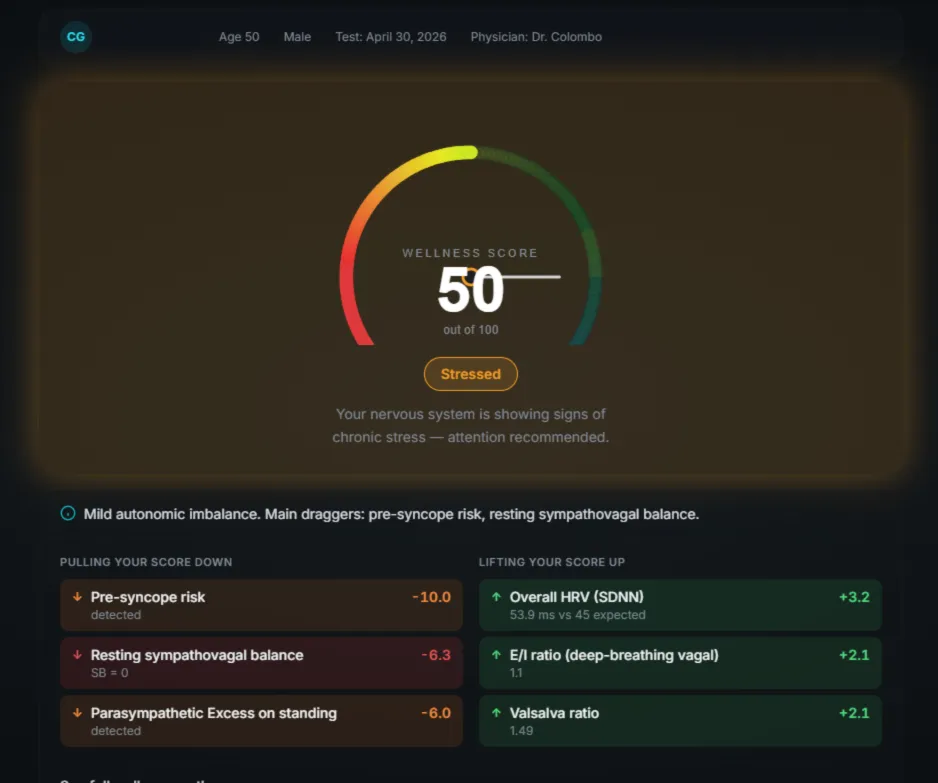
What the Physician Sees:
Parasympathetic Activity
Sympathetic Aactivity
Heart Rate
Blood Pressure
Autonomic Response
Quantitative Measurements
Clinical Interpretation

The Value
Another clinical service for patients whose symptoms don't fit the usual picture.
You already assess cardiac function. Consider whether autonomic dysregulation may also be influencing the patient's symptoms and clinical presentation.
Conventional Cardiac Evaluation
Heart Rhythm
Additional Physio PS Autonomic Information
Sympathetic Activity
Conventional Cardiac Evaluation
Heart Rate
Additional Physio PS Autonomic Information
Parasympathetic Activity
Conventional Cardiac Evaluation
Blood Pressure
Additional Physio PS Autonomic Information
Autonomic Response
Conventional Cardiac Evaluation
Structural/Function Assessment
Additional Physio PS Autonomic Information
P&S Interaction
Conventional Cardiac Evaluation
Symptoms
Additional Physio PS Autonomic Information
Quantitative Autonomic Measurements
Conventional Cardiac Evaluation
Snapshot
Additional Physio PS Autonomic Information
Potential Longitudinal Comparison
Physio PS can provide additional information to improve diagnostic capability and prioritize therapy planning across multiple disease areas.
Autonomic dysfunction can be an overlooked contributor to difficult-to-explain symptoms. Identifying an autonomic component can give clinicians additional information to consider when developing an individualized treatment and monitoring plan.
Physio PS is not intended to replace the standard cardiovascular evaluation. It provides additional information about autonomic regulation that can complement the broader clinical assessment.
See What Physio PS Can Add to Your Cardiology Practice.
Your Patients Are Complex.
Your Assessment Should Be Comprehensive.
Bring Autonomic Assessment Into Your Practice
Start With a Conversation
We'll show you:
How the assessment works
What the physician sees
Where it fits into a cardiology workflow
What training is involved
Available monitoring configurations
Implementation considerations
How practices can use the information clinically
Key Practice Integration Points
FDA 510(k) cleared
Approximately 15-minute assessment
Non-invasive monitoring
Physician-focused reporting
Training and certification
Clinical workflow integration
Multiple monitoring configurations
Support for implementation
Frequently Asked Questions By Cardiologists
Is Physio PS FDA cleared?
Yes, the technology has U.S. FDA 510(k) clearance.
How long does the test take?
Approximately 15 minutes, of testing time, plus patient setup and takedown.
What does the physician receive?
Quantitative information regarding autonomic activity and related physiologic measurements.
What does it measure?
Describe the item or answer the question so that site visitors who are interested get more information. You can emphasize this text with bullets, italics or bold, and add links.
Is it invasive?
No. The monitoring is non-invasive.
Does it replace other cardiac tests?
No. It should be positioned as additional autonomic information that complements the broader clinical evaluation.
Can it be repeated?
The system can be used for follow-up assessments when clinically appropriate; reimbursement and medical-necessity requirements should be followed. CMS guidance addresses repeat testing in the context of clinical status or response to therapy.
What about reimbursement?
Current billing codes are 95942 and 95941. (Actual billing/coding guide and clearly distinguish coding availability from payer coverage.)
Is training available?
Yes.
Can it fit into an existing practice workflow?
Physio PS offers configurations and training designed for clinical implementation.
Physician Benefits Section
Why Add Physio PS to Your Practice?
Physician Challenge
Patient isn't responding as expected
Solution: Obtain additional quantitative information about autonomic function.
Physician Challenge
Symptoms don't match routine findings.
Solution: Consider whether autonomic regulation may be contributing to the clinical picture.
Physician Challenge
The presentation is complex.
Solution: Characterize autonomic patterns alongside the broader clinical assessment.
Physician Challenge
You need an objective baseline.
Solution: Establish quantitative measurements that may be compared over time when clinically appropriate.
Physio PS can provide additional information to improve diagnostic capability and prioritize therapy planning across multiple disease areas.

Secure Payments
Secure, Verified Transactions That Protect Your Privacy.

Free Shipping
Fast & Free Shipping*!
Easy Set-Up

Enjoy Hassle-Free Onboarding*.
© Copyright 2026 Physio PS, Inc.-All rights reserved.